
 Generate


 Generate
 Adobe PDF
 Microsoft Word
 OpenDocument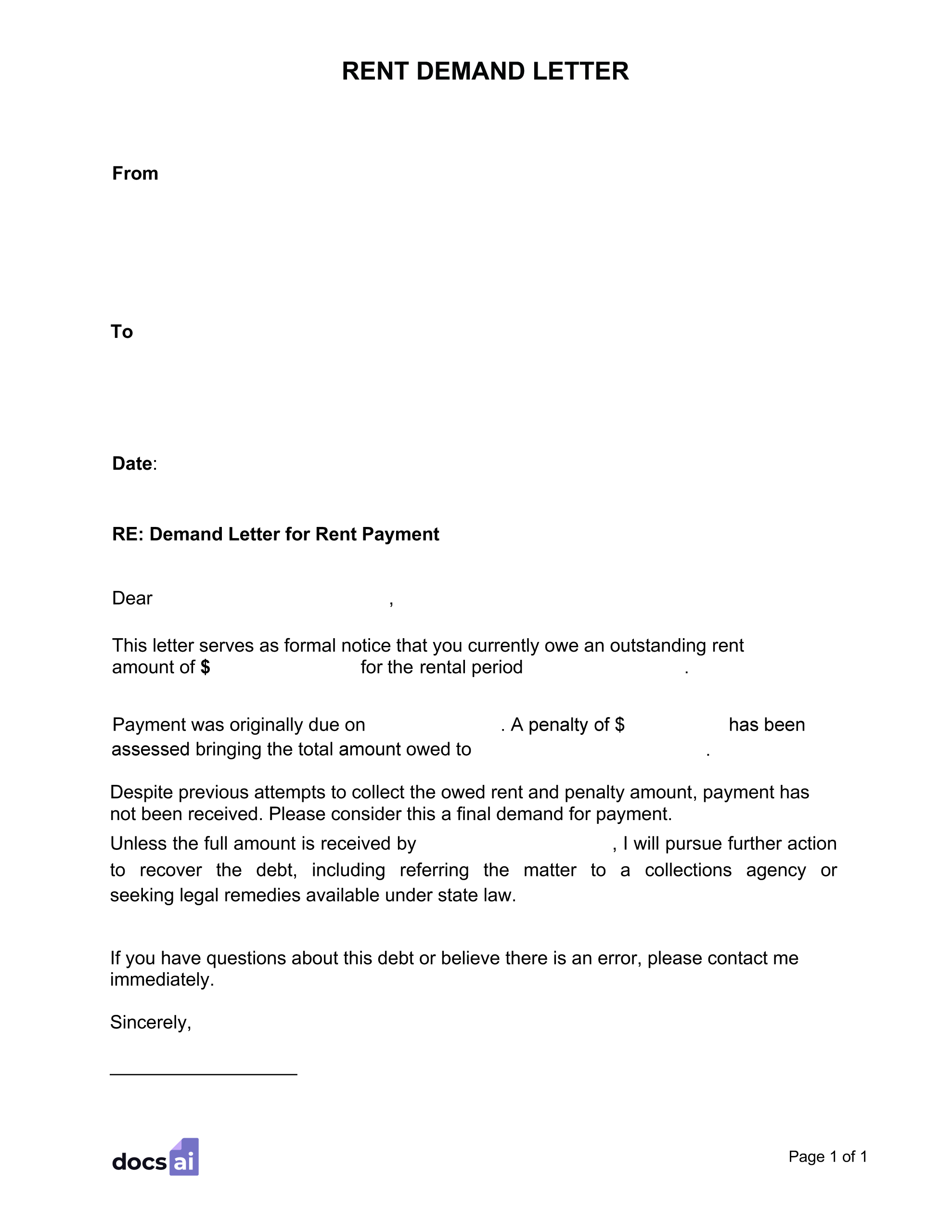
Key Features
- Identifies Parties. Names the landlord seeking payment and the delinquent tenant by name, status, and responsibility.
- Specifies Rent Amount. States the exact amount owed for rent, including penalties and fees in no uncertain terms.
- Payment Instructions. Explicitly gives the tenant instructions on how and when to pay their owed rent.
- Cites Lease. Provides the language to reference the lease and the non-payment breach directly.
- Defines Penalty. Warns the tenant of the possible legal consequences should they ignore their payment obligation.
How to Remedy (7 steps)
1. Review the Lease Agreement
Confirm the rent amount as well as the due date and grace period. Also, verify the tenant has violated the payment terms before applying fees and proceeding.
2. Confirm Local Legal Requirements
Review your state’s notice period laws (for example, MI Comp L § 600.5714 (2024) if in Michigan). Avoid potential court dismissals by satisfying all your state requirements.
3. Prepare the Rent Demand Letter
Clearly state the amount owed, the due date, any late fees, and the total balance. Include a deadline for payment and the consequences of nonpayment.
4. Send the Letter Using the Legal Method
Follow all applicable laws and deliver the letter with proof of receipt. For example, send it via certified mail, hand delivery, or post it on the tenant’s door.
5. Wait for the Deadline to Expire
Reserve any further communication until the deadline for response has elapsed with no tenant action. The issue is only resolved if payment is submitted.
6. Communicate or Negotiate As Needed
The tenant may respond to negotiate due to a lack of funds. In such a case, and if possible, develop a payment plan that resolves the matter amicably.
7. Escalate If Unresolved
If the tenant flatly refuses to pay for one reason or another, then consider remedies such as a collection agency or eviction proceedings. Make sure to obey all regulations and laws.
Sample
-
Yes. This template is designed to comply with specific state laws through its editing feature.
-
Yes, however, a written lease or (at least) a documented rental history offers a significant level of support compared to an oral agreement.
-
Yes, it is strongly recommended to include the relevant conditions and terms from the tenant’s lease in this letter.
-
Yes, since this is a customizable template, it can be tailored to apply to both residential and commercial lease agreements.
-
Yes, many states require that a written notice, such as a rent demand letter, be issued to rectify nonpayment.