
 Generate

 Generate
 Adobe PDF
 Microsoft Word
 OpenDocument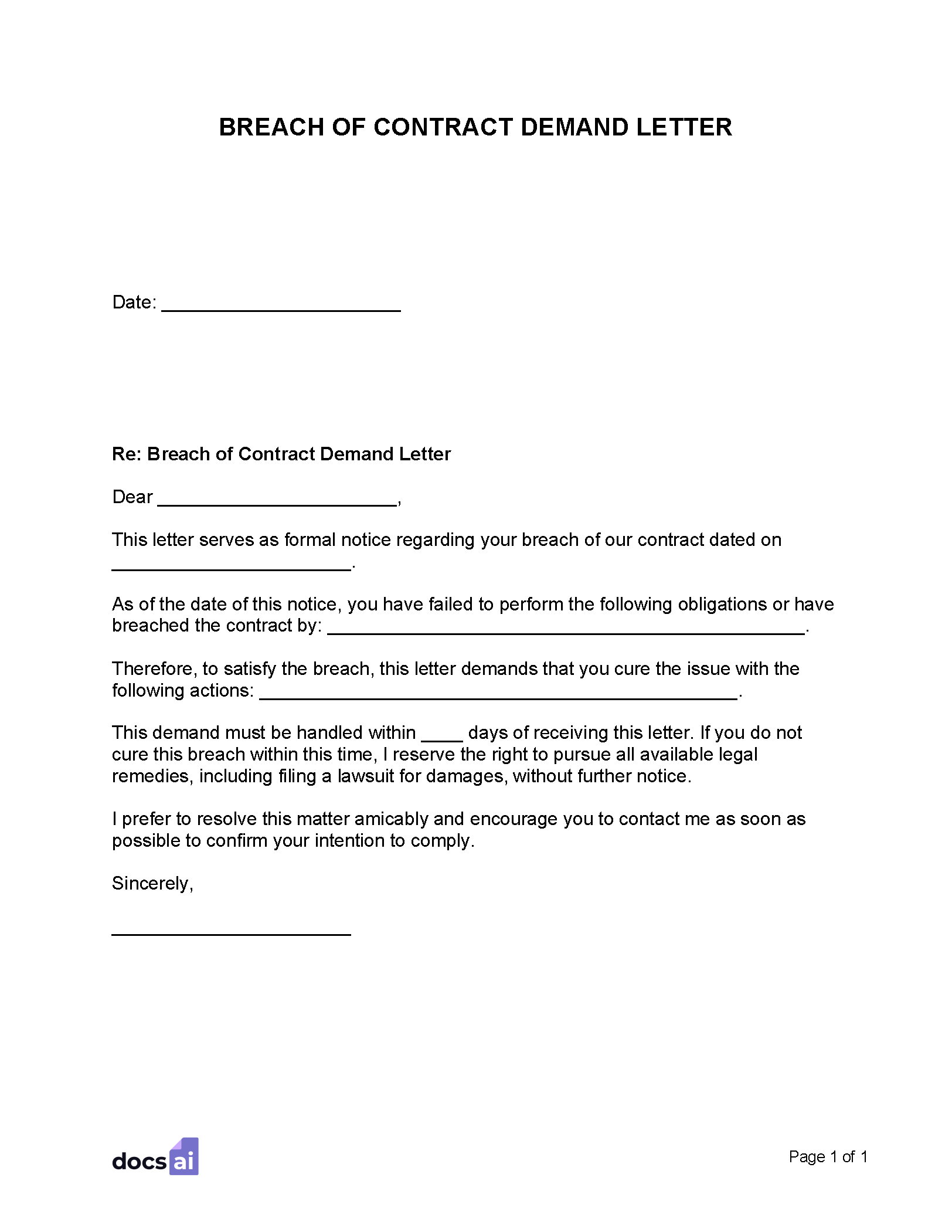
Key Features
-
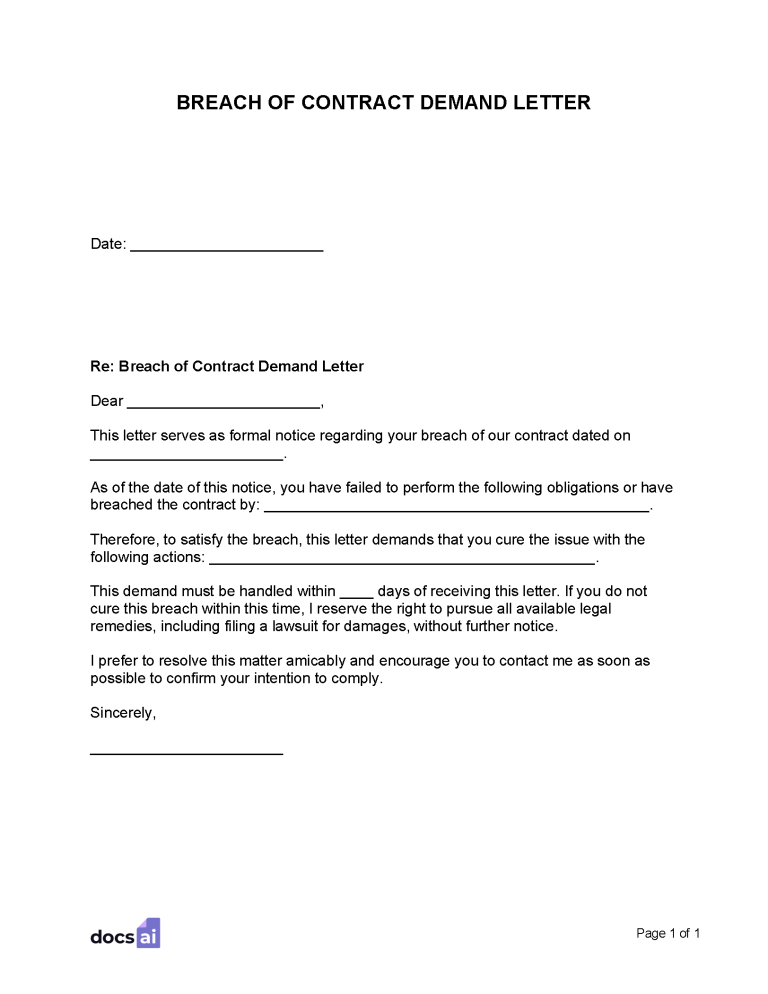
Notice of Failure to Perform. Notify the party that has failed to perform under the contract terms. Write the specific clauses that were violated.
-
Describe the Breached Obligation. Describe the specific action that violated the agreement.
-
Demand the Breach be Cured. Write instructions on how to cure the breach, including any payment for damages.
-
Set a Deadline. Write the date or timeframe when the breach must be cured.
- Warn of Legal Action. Inform them that if the breach is not rectified, legal action will be taken.
How to Remedy (6 steps)
1. Find the Original Contract
2. Gather Evidence
3. Send Notice
4. Communicate with Breaching Party
Alternative Dispute Resolution (ADR) – 2 Types
- Mediation – A neutral third (3rd) party (mediator) helps the disputing parties find an amicable solution by guiding the parties to a settlement.
- Arbitration – A neutral third (3rd) party (arbitrator) helps the disputing parties find an amicable solution by deciding a settlement on behalf of the parties (binding or non-binding).
5. File a Lawsuit (if necessary)
6. Enforce the Judgment
Sample
-
A material breach is a major and often incurable violation that terminates the original agreement. The breaching party commonly no longer has a duty to perform its obligations and is entitled to sue for damages.
-
A violated party can sue for compensatory damages, which is defined as the direct and consequential losses incurred. There is no dollar limit, but the amount of damages must be supported by evidence.
-
- Monetary Damages: A party incurring damages will likely seek monetary damages and other equitable remedies to cover losses.
- Injunction: If the breaching party continues to violate a contract despite repeated warnings, an injunction can be filed, which is a court order requiring them to stop.
- Specific Performance: A court can remedy a breach by specific performance, which requires the breaching party to fulfill its obligations under the contract.
-
A breach of contract occurs when a party fails to perform their duties and meet the obligations under a valid agreement.
This includes:
- Failing to meet specific timelines;
- Not adhering to defined standards; or
- Not performing at all.
-
Unless illegal activity is involved, a person will unlikely go to jail for breaking a contract.
However, if fraud, theft, or false information were involved, which would be deemed criminal, a person could be jailed for their actions.