
 Generate

 Generate
 Adobe PDF
 Microsoft Word
 OpenDocument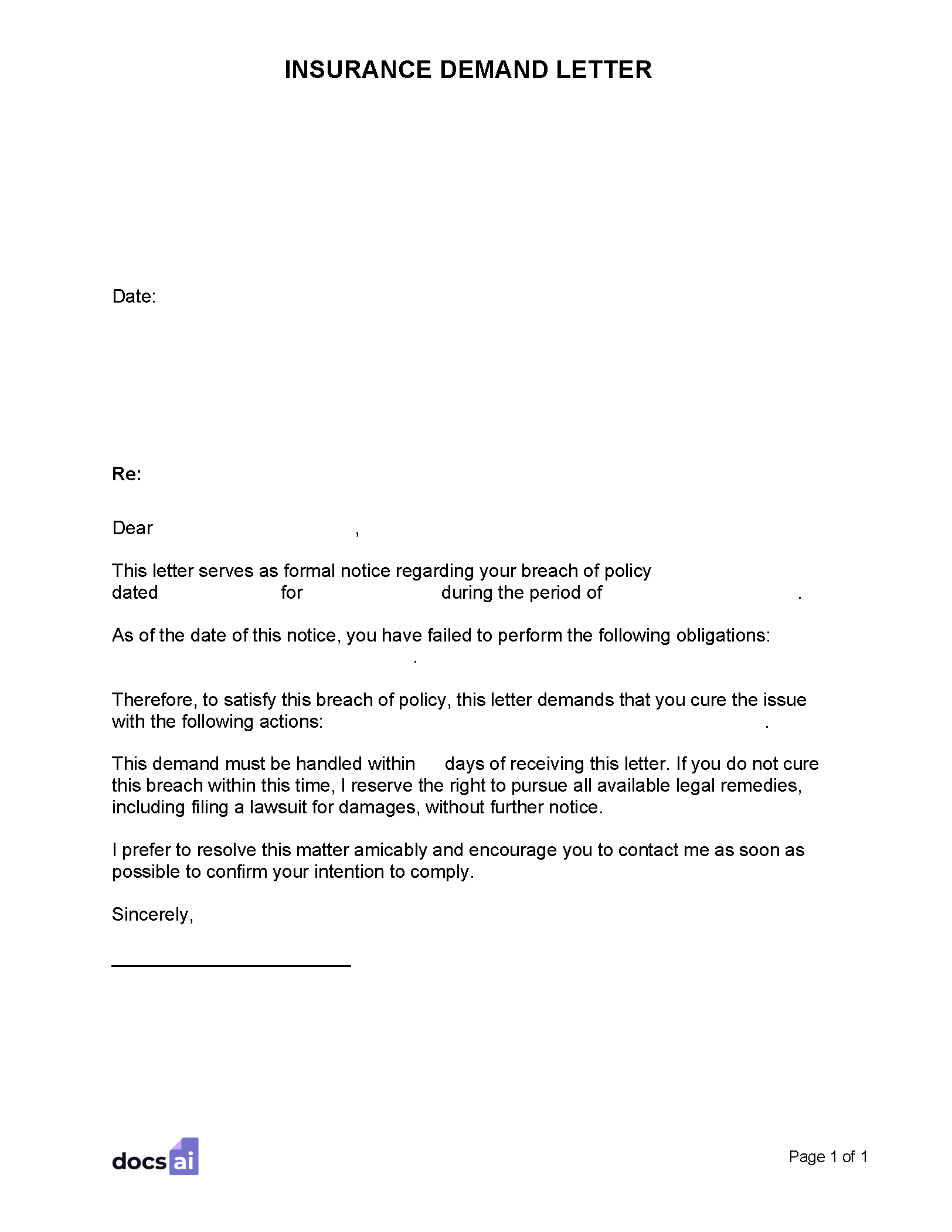
Key Features
- Statement of Purpose. Directly calls upon the insurance provider to uphold the policy through compensation for losses.
- Specifically Defines Damages. Formally documents an itemized list of financial losses that must be compensated.
- Presents Legal Basis. Describes how the insurance provider disregarded fair dealing and good faith practices.
- Demands Specific Relief. Explicitly and formally states the exact dollar amount expected.
- Sets Deadline For Response. Names a specific date when relief is to be delivered.
How to Remedy (6 steps)
1. Gather and Organize Your Medical Records and Insurance Policy
- Denial Letter or EOB (Explanation of Benefits)
- Insurance Policy
- Medical Bills, Records, Prescriptions
- Doctor Letters, Referrals, and Support
- Log of All Communications with the Insurer
2. Seek an Internal Resolution
3. File A Formal Appeal
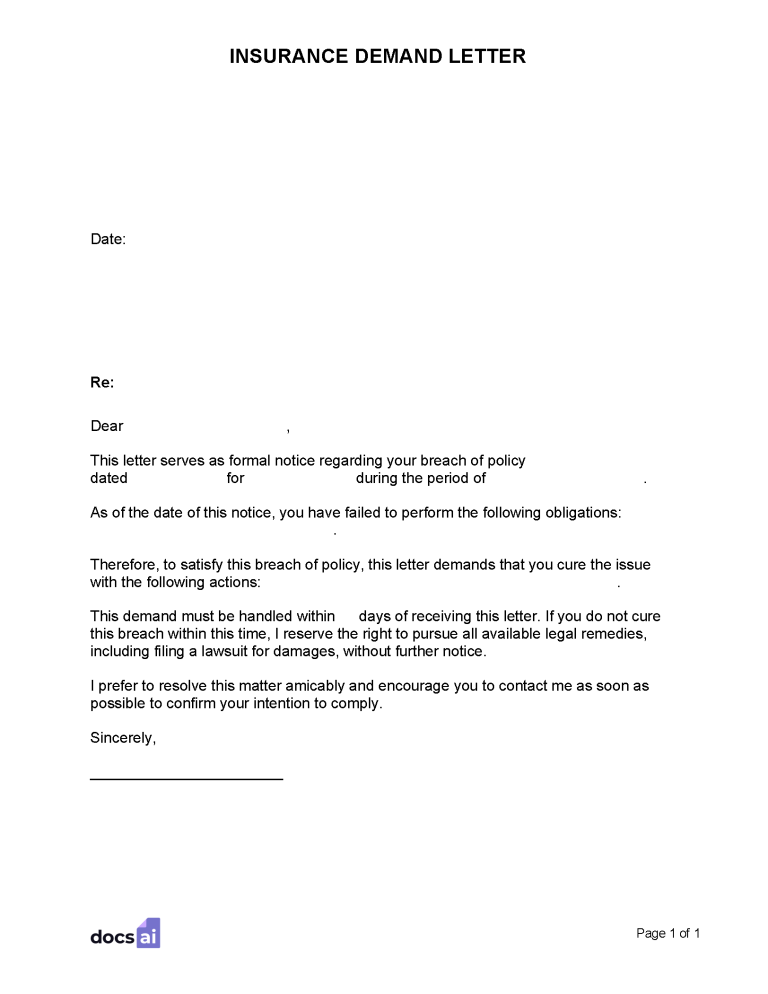
4. Send an Insurance Demand Letter
5. Response and Negotiation
6. External Appeal
Should the issue remain unresolved, then seek an independent external medical review (free in most states) or pursue this issue with:
- A civil lawsuit for acting in bad faith or a contract breach
- Small claims court for smaller amounts
- The appropriate State Insurance Department
- Department of Labor (for employer plans)
Sample
-
Yes, if your health insurance claim was unfairly denied without explanation or an unsatisfactory one, you may send a demand letter.
-
Yes. It is strongly recommended to send one using certified mail with a return receipt or by courier that can provide written proof of receipt.
-
Within 30 days of the initial denial or (if an appeal process is established) immediately after a denied appeal.
-
No, while an attorney is not necessary to send one, seeking a legal consultation at this stage is recommended in many cases.
-
Yes, detail every expense related to your claim (e.g., lost wages, repairs, prescriptions), and attach the relevant documents.