
 Generate

 Generate
 Adobe PDF
 Microsoft Word
 OpenDocument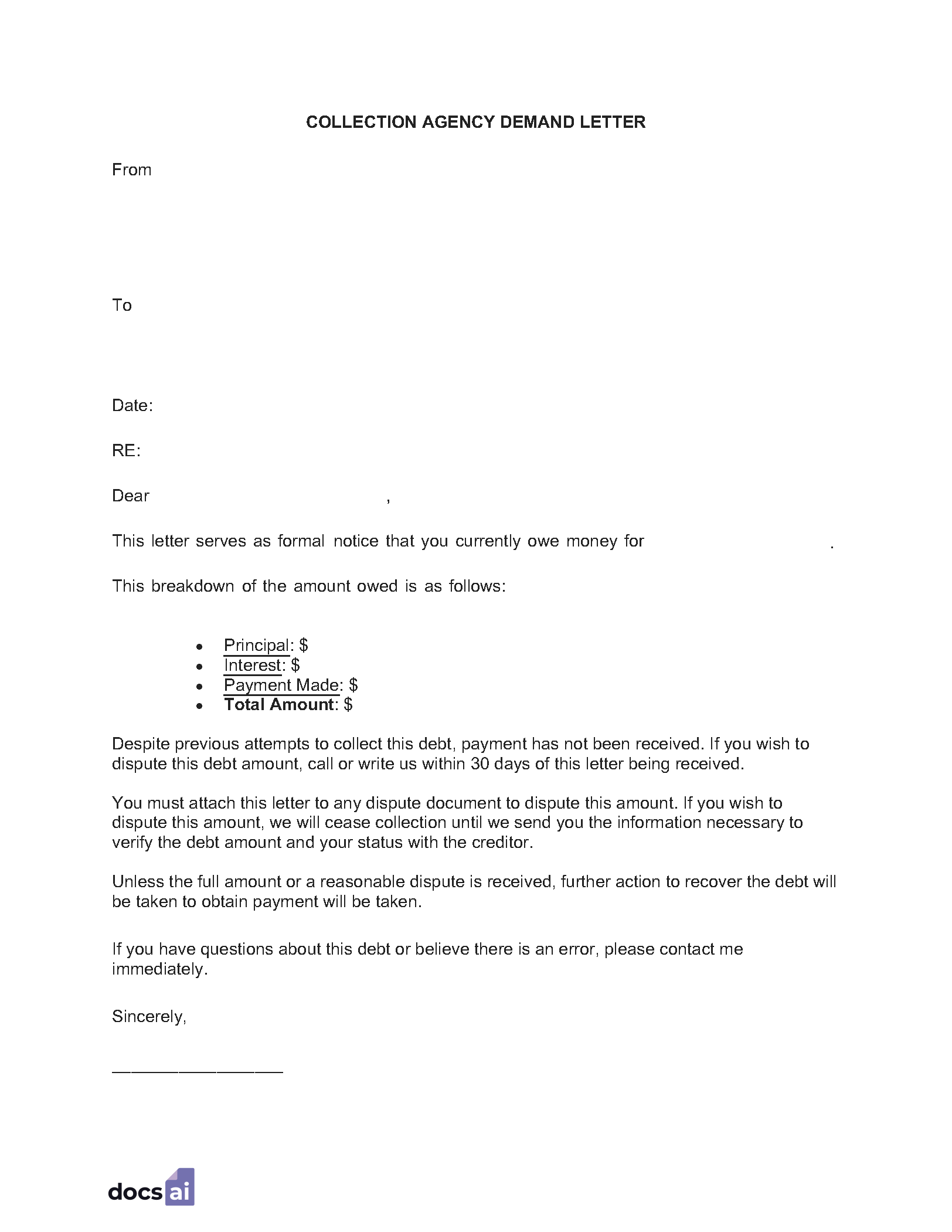
Key Features
- Enhances Credibility. Reinforces seriousness and legitimacy, thereby increasing the likelihood of a debtor’s response and even cooperation.
- Improves Clarity. Reduces the chance for misunderstandings by explicitly detailing debts and options.
- Professional Formatting. Maintains Fair Debt Collection Practices Act (FDCPA) compliance while remaining customizable.
- Consistent Language and Tone. Maintains professionalism with a neutral tone and avoids non-compliant language.
- Good Recordkeeping. Utilizing a professional template helps keep track of collection efforts, especially when building a paper trail.
How to Remedy (7 steps)
1. Verify Compliance
2. Initial Contact
3. Required Validation Notice
4. Handle A Dispute
5. Send The Demand Letter
Once the thirty-day dispute period has passed, the agency sends a demand letter if the debt remains unresolved, especially if litigation is anticipated. This must include;
- Collection agency name, contact information, intent, and status
- Debtor’s identity and contact information
- Information identifying the original creditor(s)
- Source of the debt, total owed, an itemized explanation of the total, and a due date
- Instructions to respond with payment, negotiations, or dispute
- Disclosures that are required by federal and state laws.
6. Maintain Compliance If Escalation Is Needed
7. Updating Consumer Credit Report
Sample
-
Yes, but the debtor must consent to electronic communications (as per the E-Sign Act) and it complies with the Fair Debt Collection Practices Act (FDCPA).
-
Three years (minimum) as per the Fair Debt Collection Practices Act (FDCPA) and Consumer Financial Protection Bureau (CFPB) guidelines.
-
Yes, however, it must always comply with local, state, and federal laws while remaining appropriate to the circumstances, debt, and intent.
-
Yes, debtors must be given thirty days from receipt to dispute the debt. If disputed, all collection efforts must pause until verification is provided.
-
Yes, it can include a payment plan option or even a settlement, while remaining compliant with all applicable statutes (e.g., required legal disclosures).
-
Lawsuits can be pursued by the debtor, and the agency may be responsible for up to $1,000.00 in statutory damages per violation (FDCPA § 813).