
 Generate

 Generate
 Adobe PDF
 Microsoft Word
 OpenDocument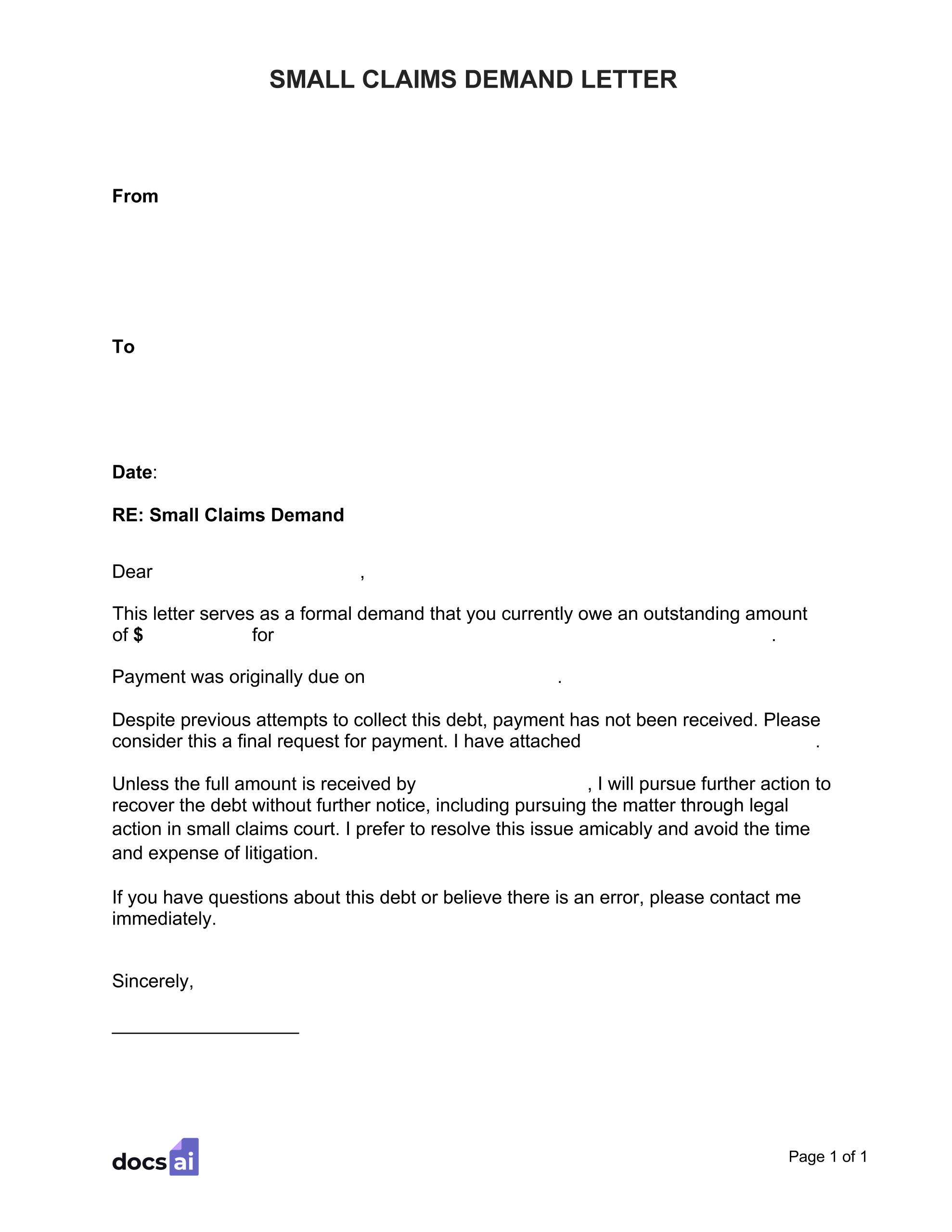
Key Features
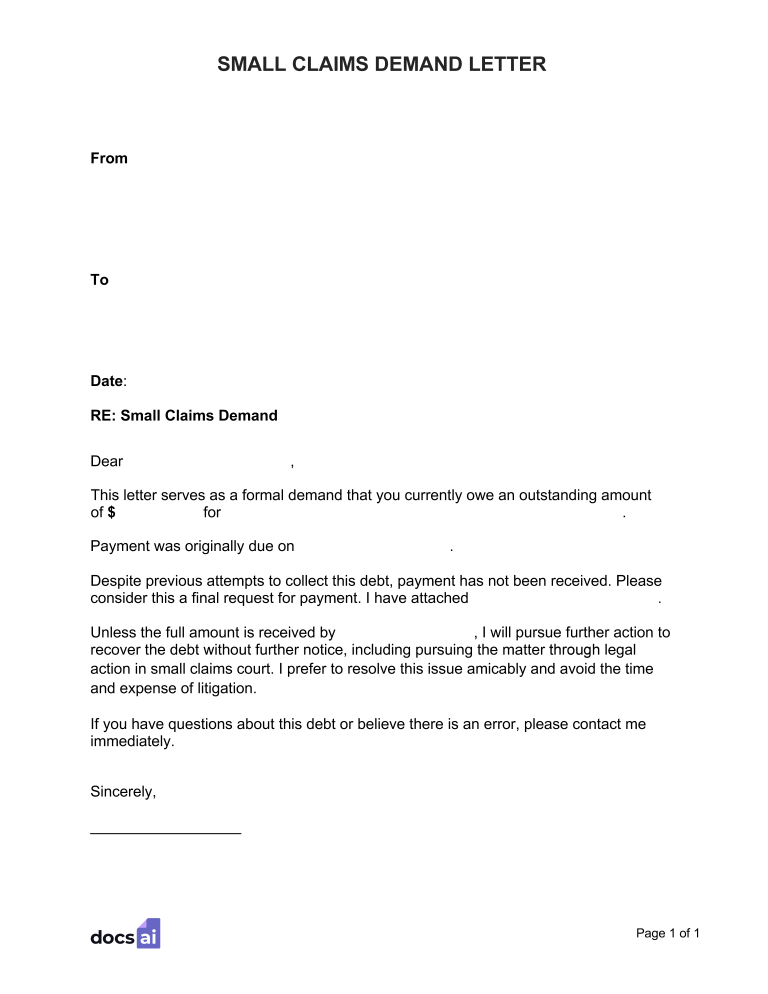
- Clear Intent. Firmly declares the intention of the sender to pursue a case in small claims court if the matter remains unresolved.
- Monetary Demand. Identifies the exact dollar amount required to avoid small claims court.
- Response Deadline. Contains the language to impose a solid time period (generally 7-14 days) to respond to the demand.
- Court Readiness Language. Implements legally sound phrases (e.g., demand for payment), demonstrating a pre-litigation effort for resolution.
- Customizable Format. Remains easy to edit for specific situations and state laws once it is downloaded.
How to Remedy (6 steps)
1. Evaluate the Legal Basis of Your Claim
Review your records, such as agreements, incident reports, and any items showing your demand’s validity. Verify compliance with your state’s small claims court requirements.
2. Draft the Small Claims Demand Letter
Compose a concise letter explaining the demand and your intent to pursue the matter in small claims court if unresolved. The letter must present:
- Names and contact information of all relevant parties
- Specific dollar amount of demand
- Incident description (e.g., personal injury, contract violation, damages, invoices)
- Evidence (e.g., medical reports, investigations, photos, warranties)
- Deadline for response
- Consequences for neglecting the letter.
3. Reliably Send the Letter
Use the USPS Certified Mail with Return Receipt Requested Service to deliver the letter. Keep records of the letter sent, its attachments, and its return receipt.
4. Wait for Response During Stated Deadline
Grant a fair chance for the recipient to respond before the due date. Be open to contact and negotiations; however, record all communication.
5. Prepare to File in Small Claims Court
If it is necessary to pursue the matter in court, gather all your evidence (especially this letter and its return receipt). Follow all your state’s small claims court procedures.
6. Use the Demand Letter at Trial As Evidence of Good Faith
Prepare to show the court the demand letter you sent with the recipient’s receipt. Showing your attempt at a good-faith resolution is often taken seriously by judges.
Sample
-
Yes, keep the originals in your records, but include as much proof as possible that demonstrates the validity of the claim.
-
Yes, states often require that such a letter is sent before continuing to court action.
-
Yes, this type of demand is appropriate to collect on most types of damages that are appropriate for small claims court.
-
Yes, while legal advice is generally recommended, one does not need to obtain a lawyer to write or send it.
-
Yes, absolutely. Not only is this a matter of good recordkeeping, it serves as evidence for the courts.