
 Generate

 Generate
 Adobe PDF
 Microsoft Word
 OpenDocument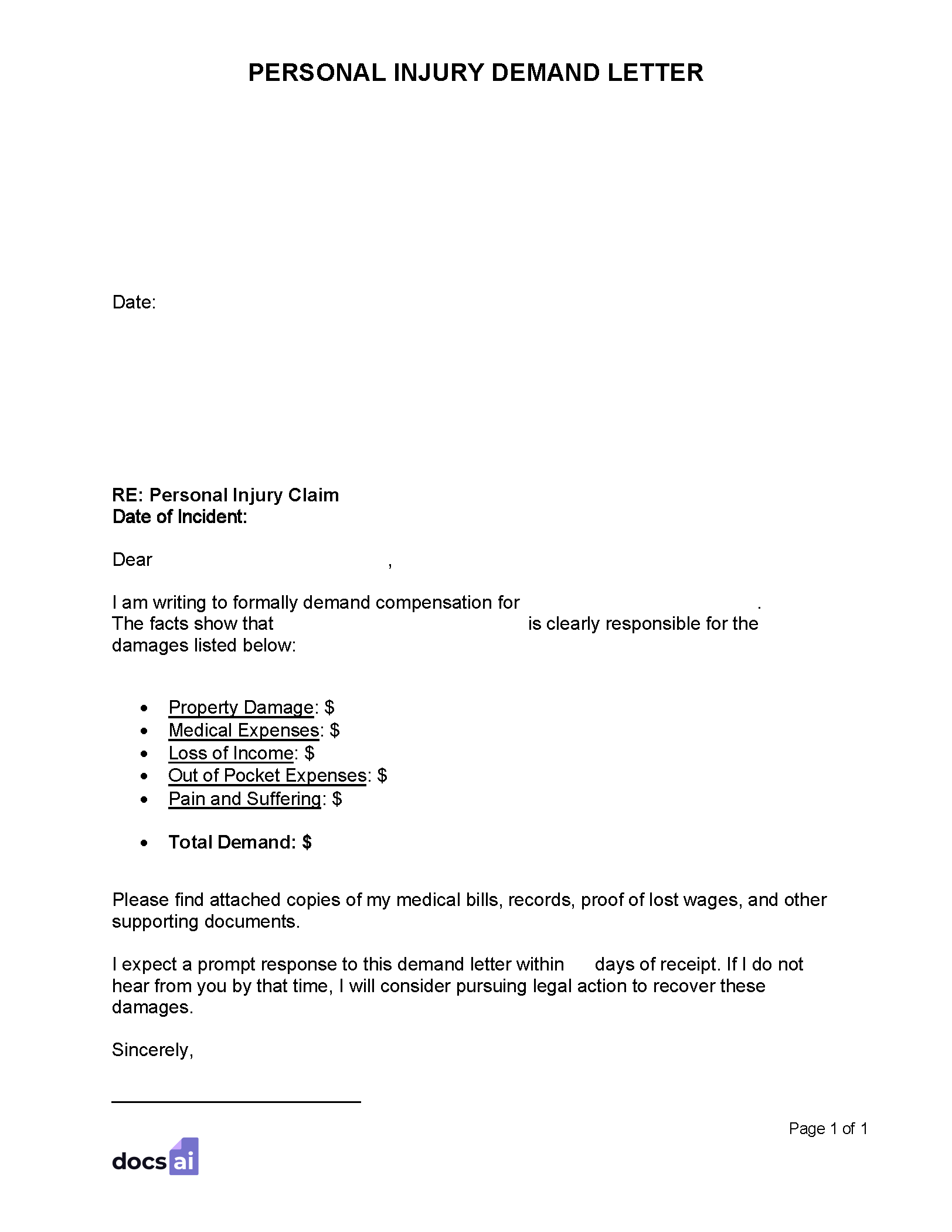
Key Features
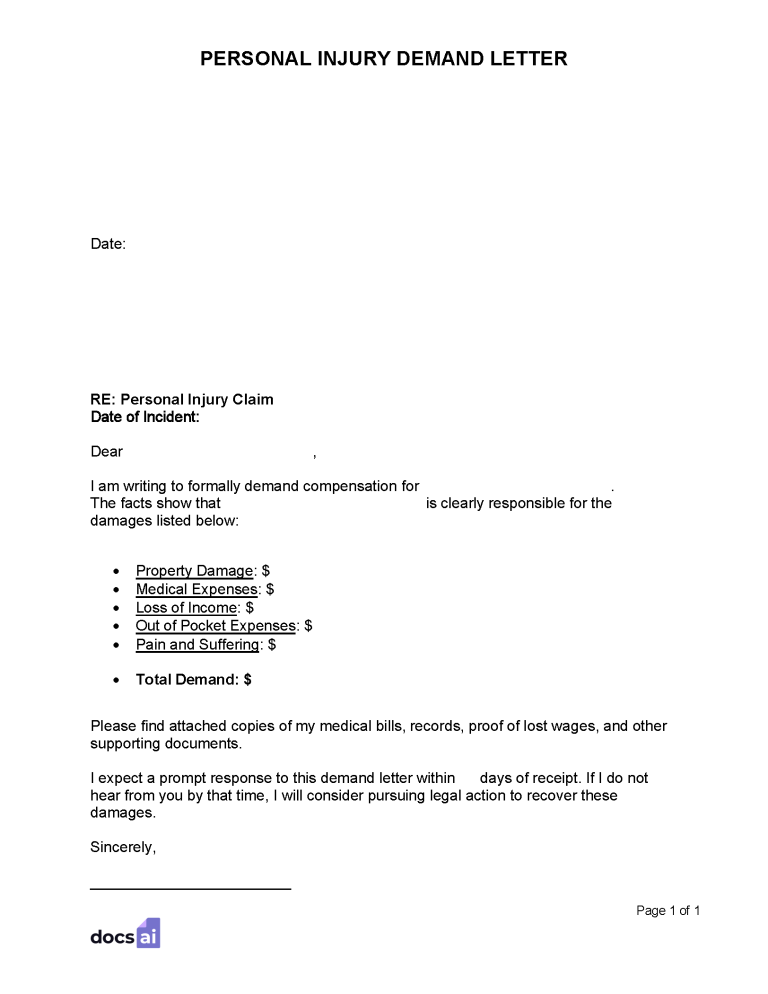
- States Liability. Defines the at-fault party while describing the personal injury, date of incident(s), and the reason for liability.
- Demands Compensation. Clearly states the amount owed, the reason for the debt, and to whom it is owed.
- Shows Legal Basis. Presents the legal reasons why the at-fault party is responsible for the personal injury.
- Customizable Tone. Adjustable to the tone required depending on the recipient (e.g., insurance adjuster, private party).
- Sets Deadline. Formally defines the time allocated to the recipient to answer the demand made.
How to Remedy (7 steps)
1. Gather and Organize Evidence
Collect all documentation related to the injury (e.g., medical records, police reports, witness statements). Also, provide proof of liability and damages as the foundation of your claim.
2. Prepare a Report on Damages
Calculate the expenses resulting from the injury (e.g., medical, lost wages) while including damages for pain and suffering. A realistic list of losses strengthens your position.
3. Draft the Demand Letter
Compose a letter that explains the incident as well as the injuries and compensation. Make sure to set a definitive deadline and include;
- The claimant’s and the recipient’s full names with their contact information
- An itemized list of losses the recipient is liable for and supporting evidence
- A strict deadline for response
4. Send the Letter to the At-Fault Party or the Insurer
Deliver this letter with solid proof of delivery (such as certified mail). Keep a copy of the letter with the return receipt for good recordkeeping.
5. Wait for a Response
Allow the recipient (or insurer) sufficient time to respond by the deadline. They must investigate the claim, then accept the demand, make a counteroffer, or reject the claim.
6. Negotiate the Settlement
Recipients often seek a negotiation, especially if it is not a clear-cut case. Thus, prepare to explain the damages and the recipient’s responsibility for compensation.
7. Finalize the Settlement
You may have to sign a release of liability form to settle the claim. Only sign this when you are ready to close the matter permanently.
Sample
-
Yes, this letter is customizable so that it may be adjusted to state laws.
-
Yes, this letter presents the professional formatting usually required to be taken seriously by insurance companies.
-
Yes, in fact, this document should be made to be specific to the incident, the claimant, and the situation.
-
No, it neither directly guarantees nor assures a settlement; however the chances of reaching one with a well-crafted letter dramatically increase.
-
No, you do not need a lawyer to send a personal injury demand letter. However, legal advice is very likely to help with high-value or complex claims.