
 Generate

 Generate
 Adobe PDF
 Microsoft Word
 OpenDocument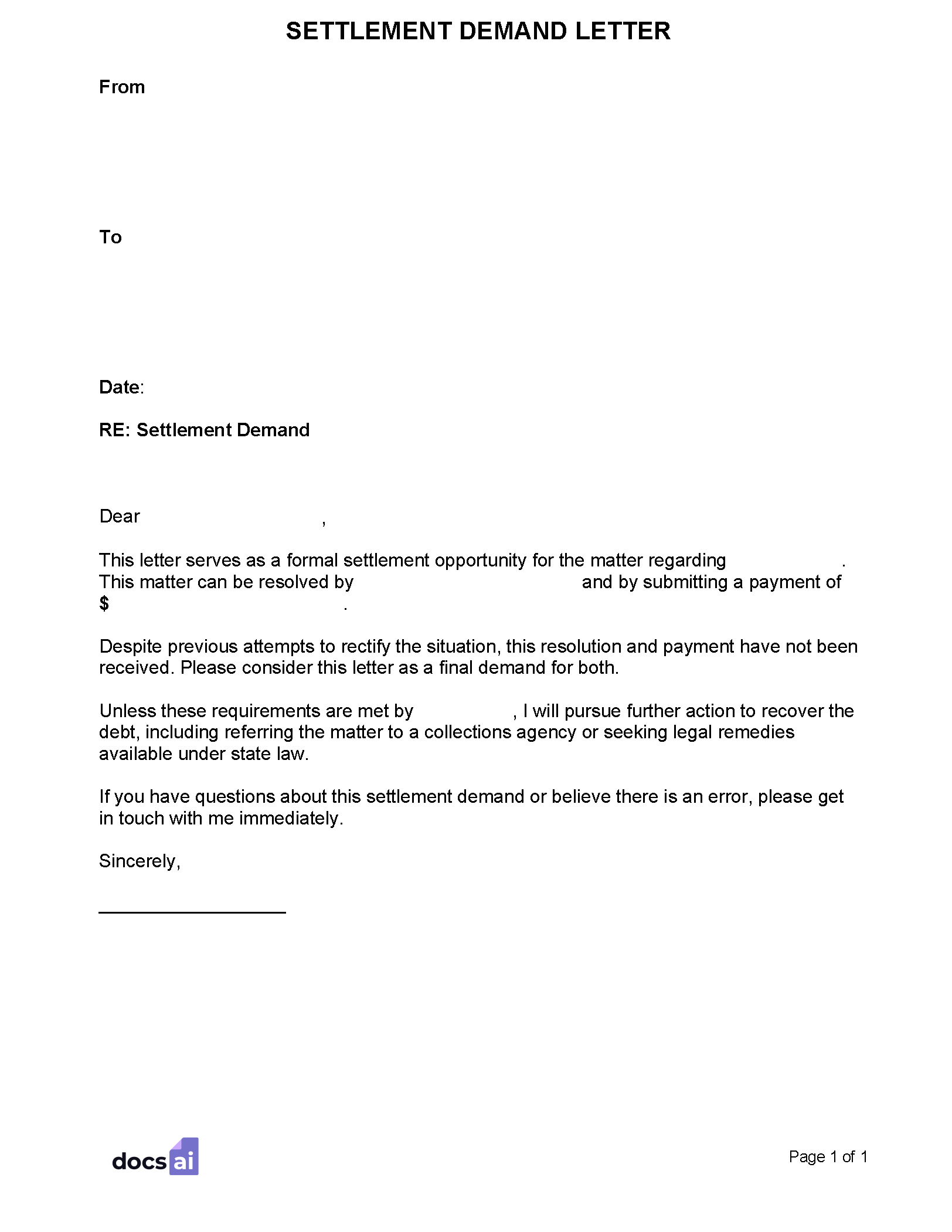
Key Features
- Cost-Effective Legal Tool. Helps resolve disputes outside of court, potentially saving costly litigation fees.
- Proof of Communication. Viewed as evidence of good faith efforts to settle the matter without going to court.
- Negotiation Starting Point. Sets the tone for negotiations to reach a mutually beneficial outcome for all parties.
- Applicable in All States. Satisfies the basic legal standards across all states while remaining customizable to specific goals and laws.
- Itemized Damages Summary. Provides the format to report damages requiring remedial actions or payment easily.
How to Remedy (7 steps)
1. Evaluate Your Position
Review the documents and communication logs demonstrating the nature of the dispute. It is imperative to validate your demand before continuing.
2. Determine the Demand
Assess the situation fairly so that you issue a reasonable settlement amount (or remedy). Decide upon the deadlines to place on all such cures.
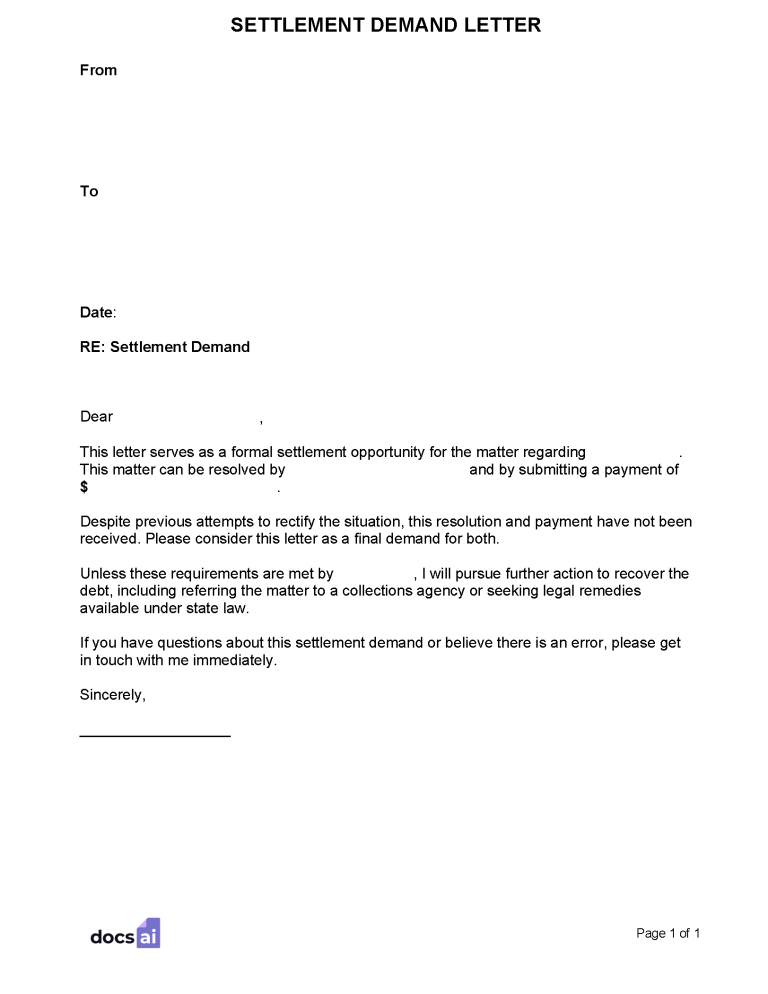
3. Complete the Settlement Demand Letter
Present the legal basis for the claim and the demand while justifying the requested cure and imposing a deadline. In addition to an objective tone, include:
- Identity of all the parties involved, especially the sender and recipient
- Reason for demand
- Requested cure
- Deadline date for response or solution
4. Send the Demand and Obtain Proof of Receipt
Use a reliable method of delivery to send this letter so its receipt is easily verified. Generally, outside of service of process, certified mail with return receipt is a favored method.
5. Wait for the Response
Consider it imperative to honor the deadline for response documented in the letter. Thus, unless contact is initiated earlier, refrain from following up before the due date.
6. Review the Response or Offer
Carefully evaluate the acceptance, counteroffer, or refusal. In some cases, continued negotiations can bring the settlement closer to your goals.
7. Pursue the Next Steps If Unresolved
If the settlement is rejected or negotiations are not possible, then consider continuing with more assertive methods such as arbitration or legal action.
Sample
-
Yes, and it demonstrates that a good-faith effort to resolve the matter privately was taken.
-
Yes, in fact, disputes are often resolved faster when a well-developed letter is sent before pursuing legal remedies.
-
Yes, if often opens the door to negotiation and possibly avoids involving the courts.
-
No, this can be written and sent privately; however, a legal consultation may result in a stronger position.
-
No, by itself, it is not legally binding, but the courts can enforce a signed agreement that results from the letter.